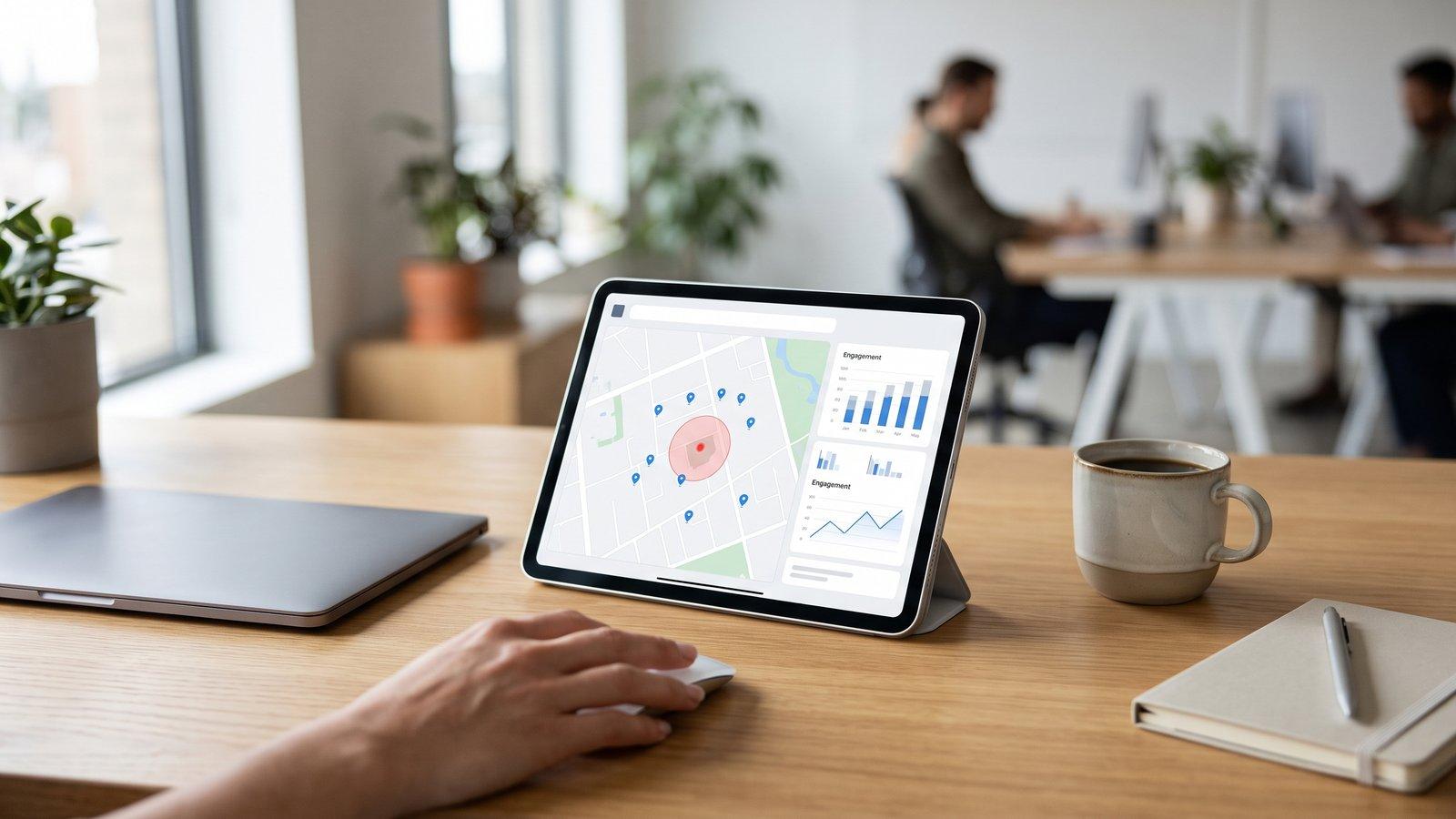
Google My Business optimization involves refining your Business profile details, categories, service areas, and media so search engines match your company to local search intent. Optimizing these assets also trains generative AI assistants to recommend your brand during conversational queries. A complete, verified, and consistent profile directly boosts local visibility and qualified customer inquiries.
Executing systematic Google My Business optimization is essential for any local company competing for visibility in Google Search, Google Maps, and emerging AI answer engines. When consumers look for immediate services, Google pulls directly from local Business profiles to deliver fast, geo-targeted answers.
Modern search extends past traditional map pins. Conversational tools increasingly pull Business data from these same verified entities, meaning an incomplete profile now costs you visibility across both standard search results and AI-generated overviews.
Why Google My Business optimization Matters for Local Search
Google My Business optimization directly improves your relevance, distance, and prominence scores within Google's local search algorithms.
Local search ranking relies on three primary pillars defined by Google: relevance, distance, and prominence. Relevance reflects how well your local listing matches the intent behind a search query. Distance measures the physical proximity between the searcher and your listed address or service boundary.
Prominence measures how well-known and credible your Business appears across the broader web. When your profile contains accurate categories, verified operating hours, detailed service lists, and steady customer feedback, search algorithms prioritize your listing over competitors with stale data.
Additionally, search engines cross-reference your Business listing against your actual domain to confirm operational authenticity. Discrepancies between your profile name, address, phone number, and website trigger algorithmic distrust, depressing your local rankings.
Core Profile Elements to Audit and Refine
Systematic profile auditing requires checking every primary field for completeness, factual consistency, and category alignment.
A successful profile setup begins with claiming and verifying your Business listing using Google's current verification procedures. Once verified, every data point requires meticulous entry to avoid customer confusion and algorithmic demotion.
Your Business description should concisely state who you are, what problems you solve, and which geographic areas you serve. Avoid cramming random promotional keywords into this field, as Google penalizes unnatural phrasing in core metadata.
Visual assets also carry substantial ranking weight. Listings with frequent, customer-submitted and owner-uploaded photographs of real work environments, storefronts, and products receive substantially higher interaction rates than profiles relying on stock visuals.
- Exact legal Business name with zero promotional keyword additions
- Primary Business category that reflects your core revenue generator
- Up to nine secondary categories covering supporting specialties
- Precise street address for storefronts or clear service radius boundaries for mobile operations
- Standard phone number matching the primary contact number on your website header
- Accurate operating hours, including temporary closures and holiday adjustments
Connecting Profile Data to Technical website Signals
A local profile performs best when supported by comprehensive website optimization on your connected landing pages.
A local profile does not exist in isolation. The landing page URL linked to your profile provides Google with rich context regarding your authority, topical depth, and technical performance.
Executing thorough website optimization ensures that the page linked to your listing loads quickly on mobile devices, presents matching contact details, and clearly explains your local offerings. If your website is slow, broken, or contradicts your profile hours, your map visibility declines.
We often see Business owners spend weeks tweaking listing descriptions while ignoring fundamental issues on their own websites. Search engines require structured harmony between external local listings and primary web properties to sustain high local trust.
Local Schema and NAP Uniformity
Your website must feature LocalBusiness structured data markup containing the identical Name, Address, and Phone (NAP) listed on your profile.
Verify that your postal code, suite numbers, and area codes mirror each other across your footer, contact page, and local directory listings without abbreviation inconsistencies.
Category Selection and keyword Research Strategies
Selecting the right primary category creates the baseline relevance for all localized search terms in your niche.
Your primary category dictates which search filters and attribute buttons appear on your profile. If you choose a secondary service as your primary classification, you immediately lose visibility for your most lucrative customer searches.
To identify proper service terms, conduct thorough website keyword analysis across your geographic territory. Analyze what successful local competitors use for their primary designations and map those discoveries to your own operational offerings.
Add granular services under your chosen categories. Each individual service should include an accurate description, pricing guidelines where applicable, and specific details that resolve common pre-purchase questions.
Local Map Pack Visibility Compared to AI Assistant Retrieval
Traditional map packs prioritize geographic proximity and review volume, whereas AI answer engines prioritize structured context and broad web citations.
Modern Business owners must optimize for two distinct retrieval systems: standard Google Maps listings and conversational AI answer engines. While both pull data from public directories, they evaluate sources differently.
Google Maps focuses heavily on user location, category matching, and direct interactions such as phone calls and navigation requests. Conversely, large language models synthesize profile data alongside reviews, directory citations, and editorial mentions across the internet.
The table below outlines how standard local map algorithms differ from AI engine citation mechanisms, illustrating why comprehensive optimization requires covering both touchpoints.
Comparison of Local Map Pack Ranking Factors vs AI Retrieval Signals
| Evaluation Factor | Google Local Map Pack | AI Assistant Citations |
|---|---|---|
| Primary Driver | Physical proximity to searcher and exact category match | Contextual relevance, domain authority, and multi-source consensus |
| Profile Data Used | Operating hours, phone, address, and primary categories | Review sentiment, service descriptions, and company background |
| On-page Dependency | Basic NAP match and landing page crawlability | Deep topical content, clear service definitions, and crawlable text |
| Interaction Signals | Click-to-call, driving directions, and local photo views | Mention frequency across industry directories, news, and forums |
Monitoring Search Performance and AI Brand Visibility
Tracking your local performance requires observing both traditional rank movements and brand mentions inside AI platforms.
Historical metrics like Google page rank have evolved into intricate local ranking ecosystems influenced by user coordinates and device types. Monitoring your presence across targeted geographic coordinates reveals whether your optimizations are expanding your reach.
At Go Top SEO, we track your website keyword positions automatically once a month, and you can run a scan by hand at any time to verify real-time adjustments. Our platform also identifies technical on-page fixes and writes and publishes targeted articles to WordPress sites through our dedicated bridge plugin or directly to Shopify stores.
Evaluating visibility in the era of generative search also means tracking whether conversational platforms recommend your Business. We automatically check whether your Business is mentioned in AI answers across ChatGPT, Gemini, and Google AI. For additional research, checks for Perplexity, Copilot, and Grok are answered for a single question on request from our menu.
Practical Checklist Before Choosing optimization Software
Evaluate optimization tools based on their ability to unify local data verification, technical site maintenance, and multi-engine tracking.
Selecting software or hiring an agency requires verifying what the service actually executes. Avoid services that rely on hollow ranking promises or vague automation that ignores your underlying website.
Ensure any chosen solution directly connects profile management with your core web property. Your profile and your website form a single operational ecosystem in the eyes of modern search algorithms.
- Check whether your primary category matches your highest-margin service rather than a generic industry classification
- Compare your Business name, street address, and phone number across your website footer, contact page, and profile for absolute uniformity
- Audit your landing page load speed on mobile devices to prevent high bounce rates from profile clicks
- Verify that your profile lists specific sub-services with clear descriptions rather than empty category labels
- Ask software providers whether their monitoring tracks both standard search queries and modern AI platform mentions
Frequently Asked Questions
How often should I update My local Business profile?
Update your profile whenever operational details change, such as holiday hours, contact numbers, or service offerings. Additionally, publish new photos and respond to recent customer reviews at least once every two to four weeks. Frequent, natural activity signals to search engines that your Business remains actively managed and accessible.
Can I use a virtual office address for My profile?
Google guidelines strictly prohibit using virtual offices, PO boxes, or unstaffed co-working spaces as physical Business addresses. If you operate without a dedicated commercial storefront where customers can visit you, register your profile as a service-area Business and designate your territory without showing a residential address.
How do customer reviews affect AI answer engine recommendations?
AI models ingest review text to extract qualitative information about your speed, pricing fairness, and specific specialties. Detailed customer reviews containing phrases like fast boiler repair or reliable commercial plumbing provide the semantic proof AI assistants need to recommend your Business during conversational search queries.
Why does My Business appear on Maps but not in AI answers?
Maps primarily considers proximity and direct categorization, while AI answer engines require corroborated authority across multiple sources. If your website lacks thorough technical optimization or minimal external citations exist across your industry, AI models may lack the confidence score required to surface your brand in summarized answers.
One website
Basic
- 4 articles a month, written and published to your website automatically
- 1 website
- Track up to 50 keywords
- Up to 50 Google ranking checks a month
- Up to 10 AI visibility checks a month
One website
Advanced
- 12 articles a month, written and published to your website automatically
- 1 website
- Track up to 100 keywords
- Up to 100 Google ranking checks a month
- Up to 20 AI visibility checks a month
Multiple websites
Premium
- 50 articles a month, written and published automatically, shared across all your websites, up to 5 a week per website
- Up to 10 websites
- Track up to 100 keywords per website
- Up to 200 Google ranking checks a month per website
- Up to 20 AI visibility checks a month per website
Agencies
Agency
- 200 articles a month, written and published automatically, shared across all your websites, up to 5 a week per website
- Up to 100 websites
- Track up to 200 keywords per website
- Up to 400 Google ranking checks a month per website
- Up to 50 AI visibility checks a month per website
No credit card. Cancel any time.