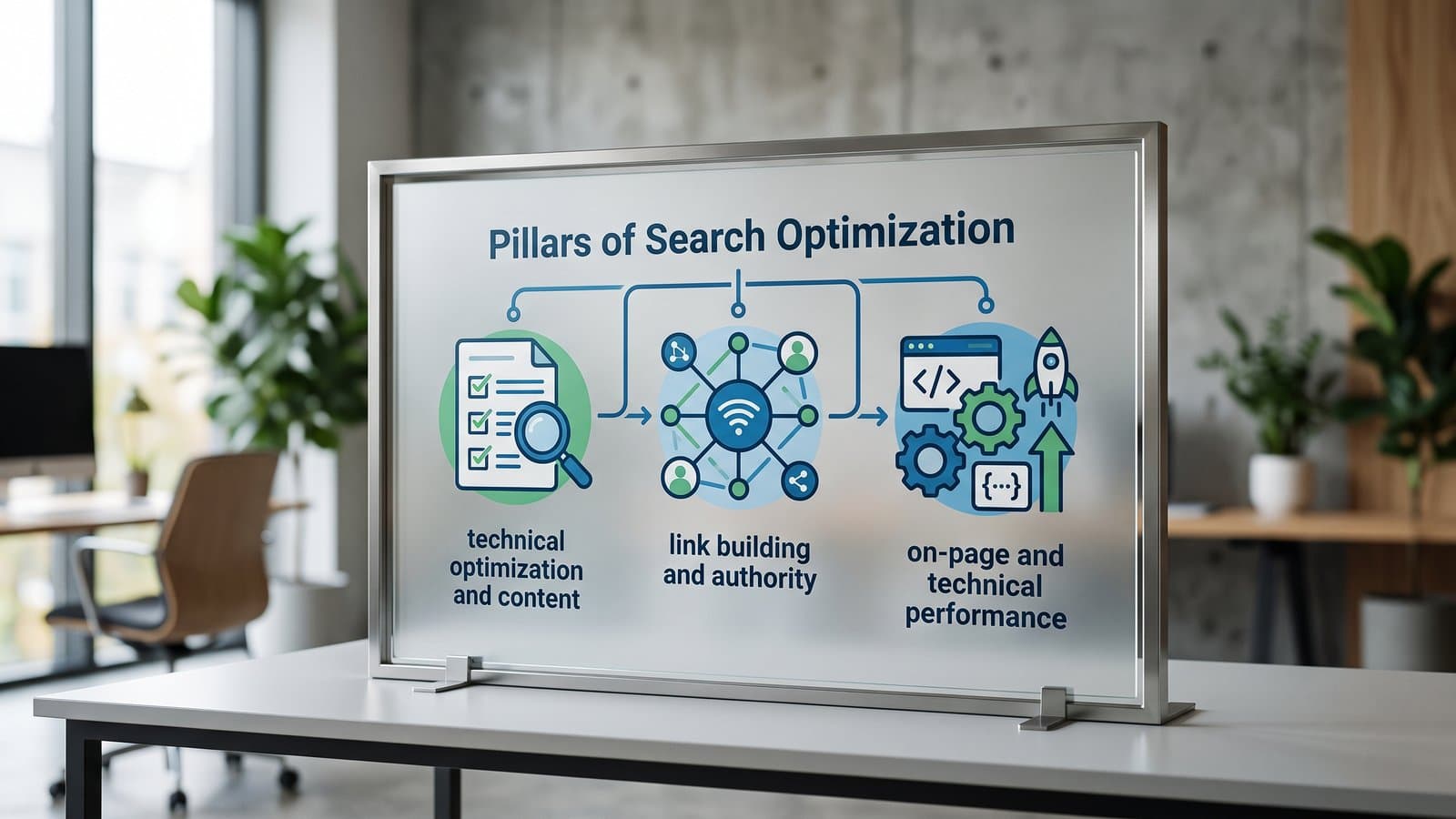
search optimization Is The process of improving your website's visibility in search engine results pages (SERPs) and AI-powered answers. It involves a combination of technical adjustments, content creation, and authority-building strategies to attract more relevant organic traffic. for a business, this means getting found by customers who are actively looking for your products or services.
In today's digital marketplace, your customers are constantly searching for answers, products, and services online. Effective search optimization Is The bridge that connects their questions to your business. It's no longer just about ranking on google; it's about appearing in The conversational answers of AI assistants and being The trusted authority in your field. Understanding The principles of search optimization Is fundamental for any business owner or marketer aiming for sustainable Growth.
This Guide breaks down The complex world of search optimization into actionable components. We will explore The core pillars of The practice, from foundational keyword research to The technical health of your site, and how The rise of AI Is reshaping The landscape. Our goal Is to provide you with The knowledge to make informed decisions that drive meaningful results.
What Are The Core Components of search optimization?
search optimization Is built on three interconnected pillars: on-page SEO, off-page SEO, and technical SEO.
Think of these three areas as The foundation, walls, and roof of your digital presence. On-page SEO involves optimizing The content and structure of your individual web pages. Off-page SEO focuses on building your site's authority and reputation across The web. Finally, technical SEO ensures your website provides a solid, accessible foundation for search engines to crawl and index.
A successful search optimization strategy requires a balanced approach to all three. Neglecting one area can undermine your efforts in The others. for example, creating fantastic content (on-page) won't matter if search engines can't access your site due to technical issues, or if your site lacks The authority (off-page) to rank for competitive terms.
Comparison of On-Page, Off-Page, and Technical SEO
| Component | Primary Goal | key Activities |
|---|---|---|
| On-Page SEO | Make content relevant and clear for users and search engines. | keyword research, content creation, title tag optimization, internal linking. |
| Off-Page SEO | Build authority, trust, and reputation for your website. | Link building from reputable sites, brand mentions, social media marketing. |
| Technical SEO | Ensure The site Is crawlable, indexable, and performs well. | Improving site speed, mobile-friendliness, creating an XML sitemap, using HTTPS. |
How Does keyword research Drive search optimization?
keyword research Is The process of identifying The specific words and phrases your target audience uses to find solutions like yours, forming The foundation of your entire content strategy.
Effective search optimization begins with understanding your customer's language. You might call your product a 'beverage thermal regulator', but your customers are searching for a 'travel coffee mug'. keyword research closes this gap, ensuring your content aligns with user intent—The 'why' behind a search query. A great resource to begin with Is our "A Practical Guide to key word research for business Growth".
The goal isn't just to find high-volume keywords, but to find The right keywords. These are terms that are relevant to your business, have a reasonable level of competition, and match The intent of your ideal customer, whether they are looking for information, comparing options, or ready to make a purchase.
Choosing The Right Keywords
Start by brainstorming topics relevant to your business. Think about The problems you solve for your customers. Use a tool to expand on these ideas and gather data on search volume and difficulty. We recommend exploring options like The official planner from google. for a deeper dive, consider our Guide on "Mastering The google keyword planner: A Guide for business Growth".
- Focus on 'long-tail' keywords (phrases of three or more words). They often have lower competition and higher conversion rates because they are more specific.
- Analyze competitor keywords to identify opportunities you may have missed.
- Map keywords to different stages of The customer journey, from awareness to decision.
Common keyword research Mistakes
A common pitfall Is targeting keywords that are too broad or competitive, leading to frustration and a lack of results. Another Is ignoring user intent; for example, creating a product page for a keyword where users are clearly looking for a 'how-to' Guide. Finally, many Businesses perform keyword research once and never revisit it, failing to adapt to changing search trends.
Why Is Technical SEO a Crucial, Yet Overlooked, Element?
Technical SEO Is The critical practice of ensuring your website's infrastructure allows search engines to find, crawl, and index your content without any issues.
If on-page SEO Is The quality of your message, technical SEO Is The clarity of its delivery. A website can have The best content in The world, but if it loads slowly, Is not secure, or Is confusing for search engine crawlers to navigate, its potential will never be realized. Core elements include site speed, mobile-friendliness, a logical site structure, and security (HTTPS).
Many business owners find technical SEO intimidating, but it often comes down to a series of checks and fixes. At Go Top SEO, our platform Is designed to automatically find and report on these technical on-page issues, removing The guesswork for our users. for example, we check for broken links, missing image descriptions, and page title issues that can hinder performance.
Here's a Practical step you can take yourself: Use a free tool like google's PageSpeed Insights to test your homepage's performance. The report will give you specific, actionable feedback on What's slowing your site down. You can also check if your site has a sitemap.xml file by typing your domain followed by /sitemap.xml into your browser. This file acts as a roadmap for search engines.
How Has AI Transformed search optimization?
AI has fundamentally changed search optimization by introducing generative answers directly in search results and making conversational assistants a primary source of information.
The rise of AI-powered search, like google's AI Overviews, and large language models (LLMs) like ChatGPT and Gemini, means users often get direct answers instead of just a list of links. for Businesses, this presents both a challenge and an opportunity. The new goal Is not just to rank, but to be The authoritative source cited within these AI-generated responses.
This shift places an even greater emphasis on creating clear, factual, and trustworthy content. AI models are trained to synthesize information from credible sources. to appear in their answers, your content must directly and expertly address common user questions. It needs to be well-structured with clear headings, concise language, and verifiable facts.
A simple way to check your visibility Is to ask these AI assistants The same questions your customers would ask you. See What answers they provide and which websites they cite as sources. We've seen firsthand how important this Is, which Is why our platform automatically checks if a client's business Is mentioned in answers from major AI engines like ChatGPT, Gemini, and google's own AI results.
What Content Strategy Works Best for Modern search?
The best content strategy for modern search optimization prioritizes creating genuinely helpful, expert-driven content that directly satisfies user intent.
Gone are The days of stuffing keywords into thin articles. Today, search engines reward content that demonstrates strong E-E-A-T: Experience, Expertise, Authoritativeness, and Trustworthiness. This means writing from a place of genuine knowledge, showcasing your credentials, and building a reputation as a reliable source of information in your industry.
Your content should be created for your audience first and search engines second. Think about their pain points, questions, and goals. Create comprehensive articles, how-to guides, and detailed product descriptions that leave The reader with no further questions. This approach not only helps with search optimization but also builds trust with potential customers.
for example, instead of an article titled 'Our Services', create a detailed Guide titled 'How to Choose The Right [Service] for Your Small business'. This addresses a user's need directly, positions you as an expert, and naturally incorporates relevant keywords. for Businesses on platforms like WordPress or Shopify, tools like The Go Top SEO Bridge plugin can help streamline The process of publishing this kind of optimized content directly to your site.
How Can You Measure The Success of Your search optimization Efforts?
You can measure The success of search optimization by consistently tracking key performance indicators (KPIs) like keyword rankings, organic traffic volume, and user engagement metrics.
search optimization Is not a 'set it and forget it' activity. It requires ongoing monitoring to understand What's working and where adjustments are needed. The most direct metric Is keyword rankings—are you moving up or down for your target terms? Tracking these positions over time shows The direct impact of your efforts.
Beyond rankings, you should monitor organic traffic in a tool like google Analytics. Is traffic from search engines increasing? Are visitors staying on your site and viewing multiple pages? These engagement signals tell search engines that users find your content valuable. This entire ecosystem Is part of a broader strategy. for context on how it all fits together, it's helpful to understand "What Is search engine marketing? A Complete Guide for Businesses".
Ultimately, The most important metric Is conversions. Are these visitors signing up for your newsletter, filling out a contact form, or making a purchase? Connecting your search optimization work to these business outcomes Is The true measure of success. A structured approach, combining content creation with regular performance tracking, Is The most effective path forward. If you're ready to implement such a system, you can explore The tools available on our signup page.
Frequently Asked Questions
How long does search optimization take to show results?
search optimization Is a long-term strategy. While minor technical fixes can show results in weeks, significant gains in rankings and traffic from content efforts typically take 4 to 12 months. The timeline depends on your industry's competitiveness, your website's current authority, and The consistency of your efforts. Patience and persistence are key.
What's The difference between SEO and SEM?
search engine optimization (SEO) focuses on earning organic (unpaid) traffic from search engines. search engine marketing (SEM) Is a broader term that encompasses both SEO and paid advertising methods, like pay-per-click (PPC) ads. SEO builds long-term authority, while PPC offers immediate visibility for a cost.
Can I do search optimization myself?
Yes, many aspects of search optimization can be managed by a business owner, especially with The help of modern software platforms. Foundational tasks like creating helpful content and basic on-page optimization are very accessible. However, complex technical issues or highly competitive link-building may require specialized expertise.
Is search optimization a one-time task or an ongoing process?
search optimization Is an ongoing process, not a one-time project. search engine algorithms are constantly updated, competitors are always working to outrank you, and customer search behavior changes over time. Continuous effort in content creation, technical maintenance, and performance monitoring Is necessary to maintain and improve your visibility.
Why did my website's rankings suddenly drop?
A sudden drop in rankings can be caused by several factors. Common culprits include a recent google algorithm update, new technical issues on your site (like accidental blocking of crawlers), a manual penalty from google for violating guidelines, or competitors significantly improving their own search optimization. A thorough site audit Is The first step to diagnosing The problem.
How often should I publish new content for SEO?
The ideal frequency depends on your industry and resources, but consistency Is more important than volume. Publishing one high-quality, in-depth article per week or every two weeks Is often more effective than publishing thin, low-value content daily. Focus on creating valuable resources for your audience, and a regular publishing schedule will naturally support your search optimization goals.
One website
Basic
- 4 articles a month, written and published to your website automatically
- 1 website
- Track up to 50 keywords
- Up to 50 Google ranking checks a month
- Up to 10 AI visibility checks a month
One website
Advanced
- 12 articles a month, written and published to your website automatically
- 1 website
- Track up to 100 keywords
- Up to 100 Google ranking checks a month
- Up to 20 AI visibility checks a month
Multiple websites
Premium
- 50 articles a month, written and published automatically, shared across all your websites, up to 5 a week per website
- Up to 10 websites
- Track up to 100 keywords per website
- Up to 200 Google ranking checks a month per website
- Up to 20 AI visibility checks a month per website
Agencies
Agency
- 200 articles a month, written and published automatically, shared across all your websites, up to 5 a week per website
- Up to 100 websites
- Track up to 200 keywords per website
- Up to 400 Google ranking checks a month per website
- Up to 50 AI visibility checks a month per website
No credit card. Cancel any time.